


For our international readers: at the end of the article, you can find the text in English.
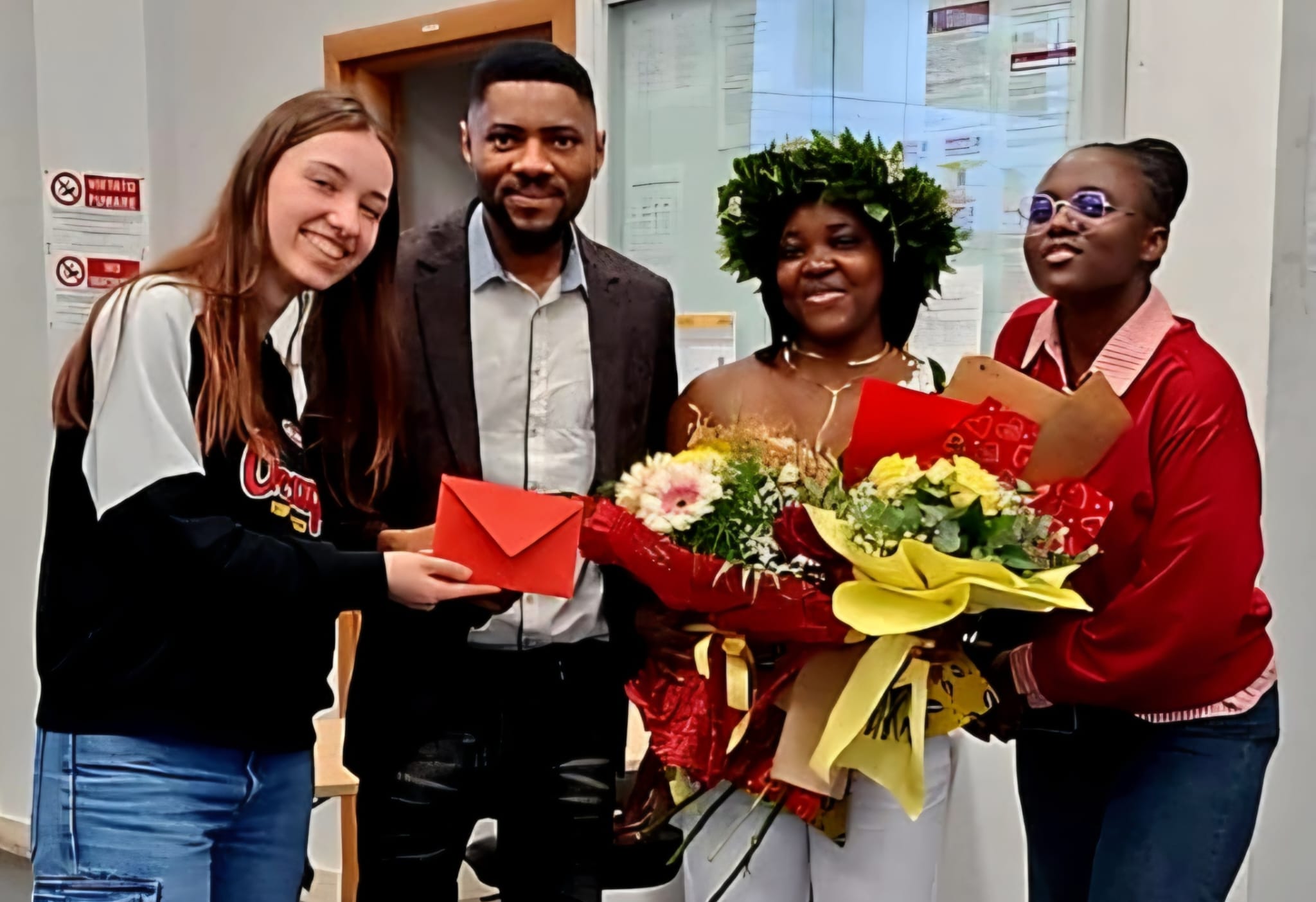
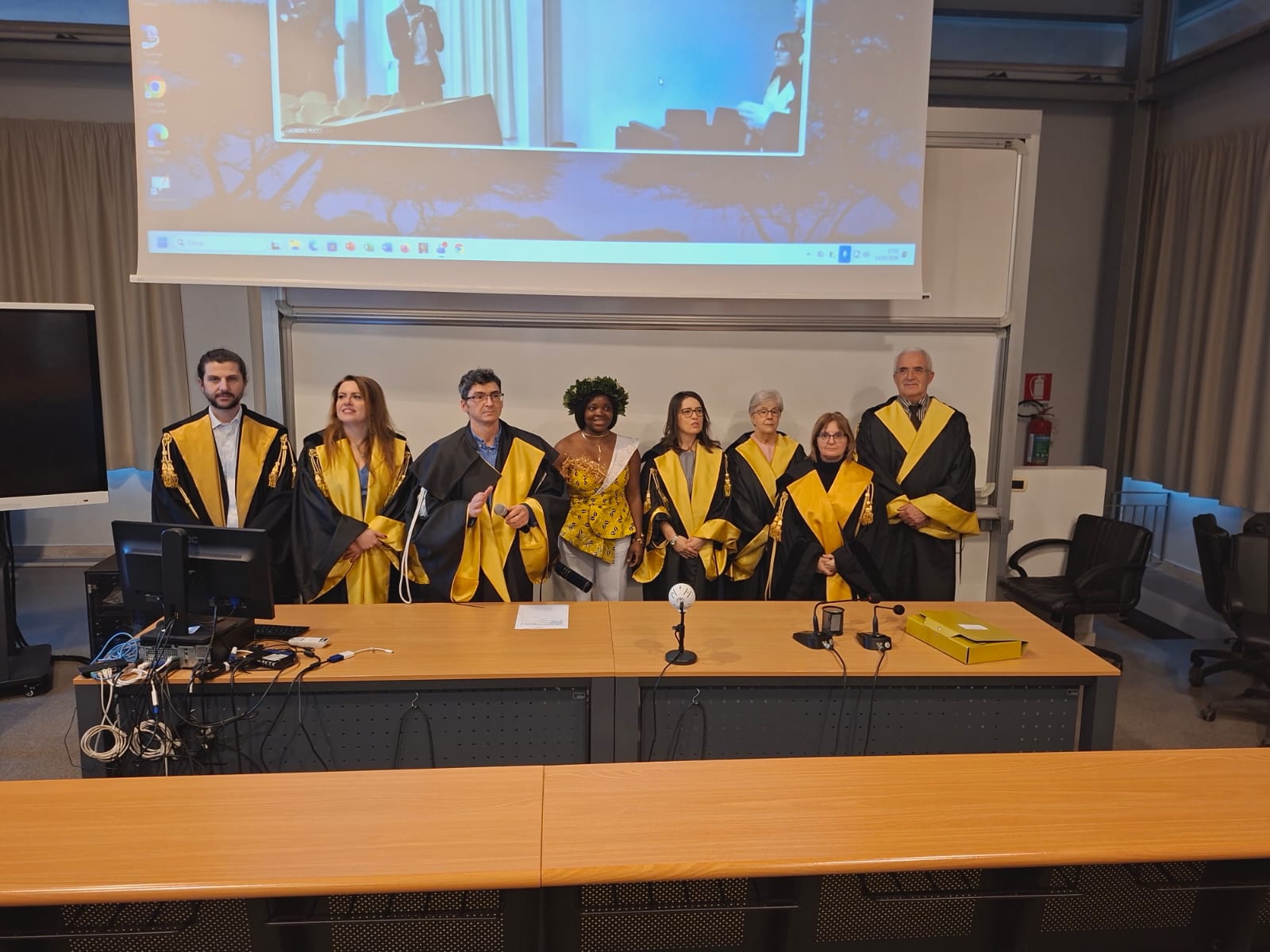
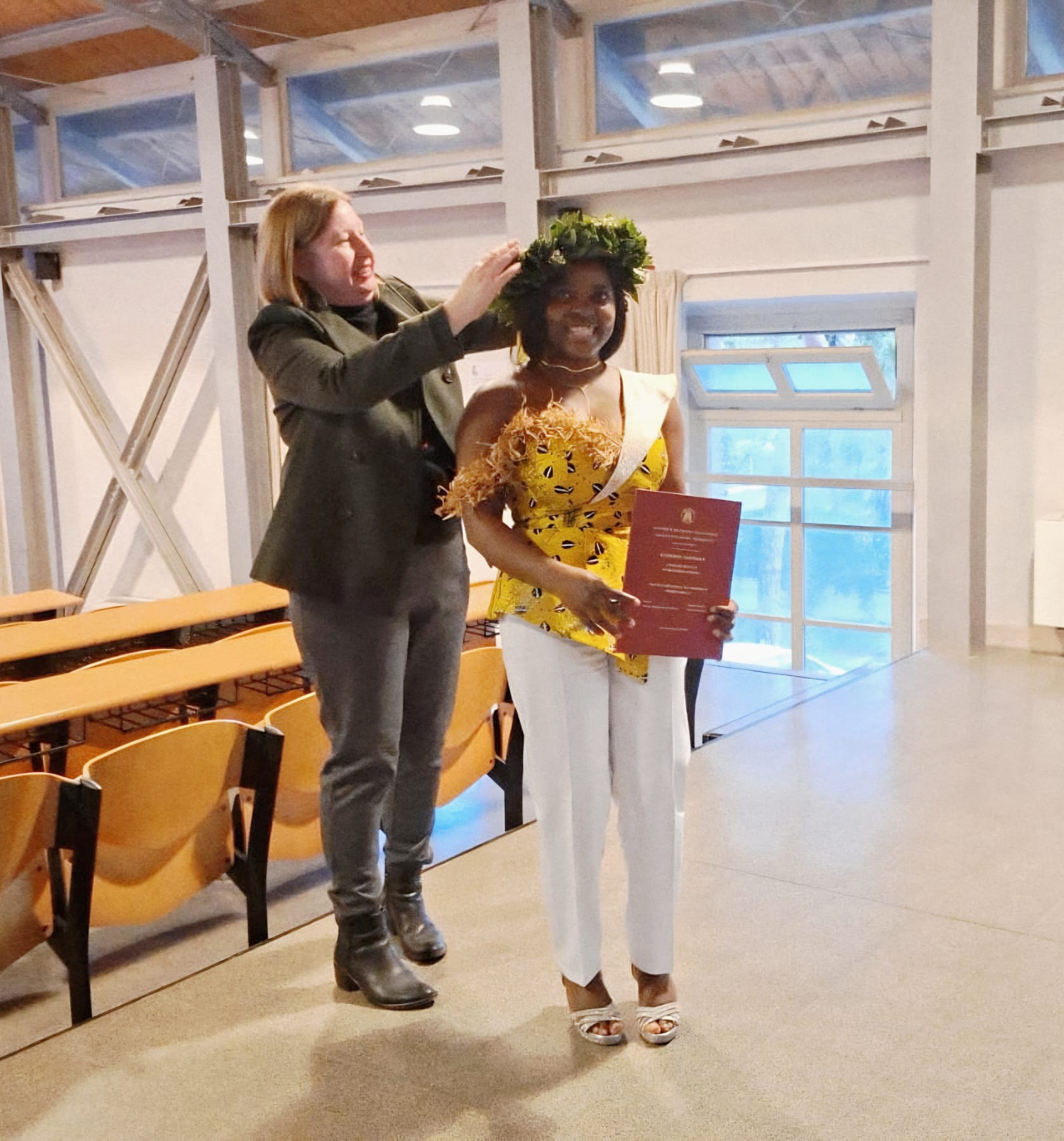
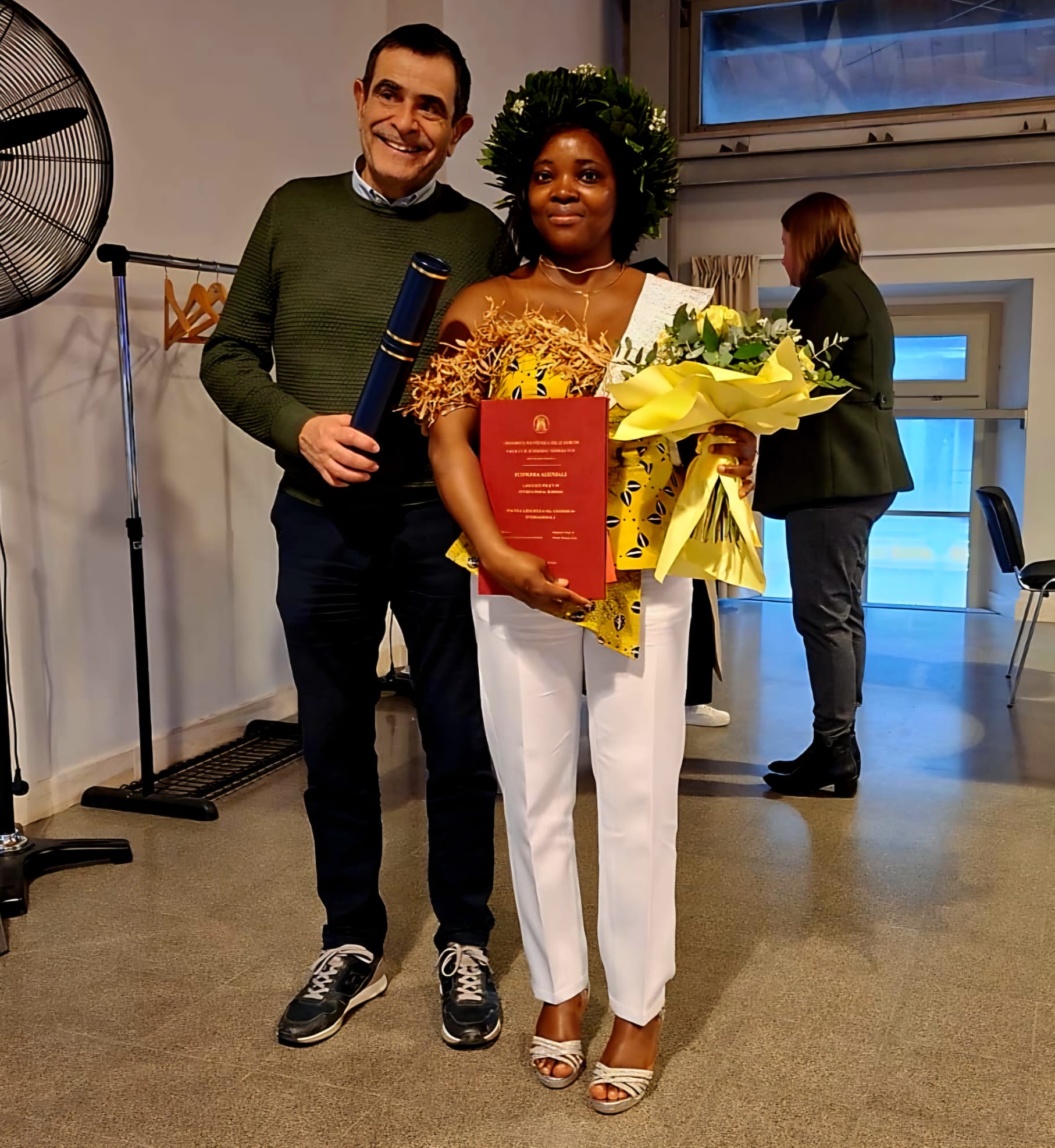
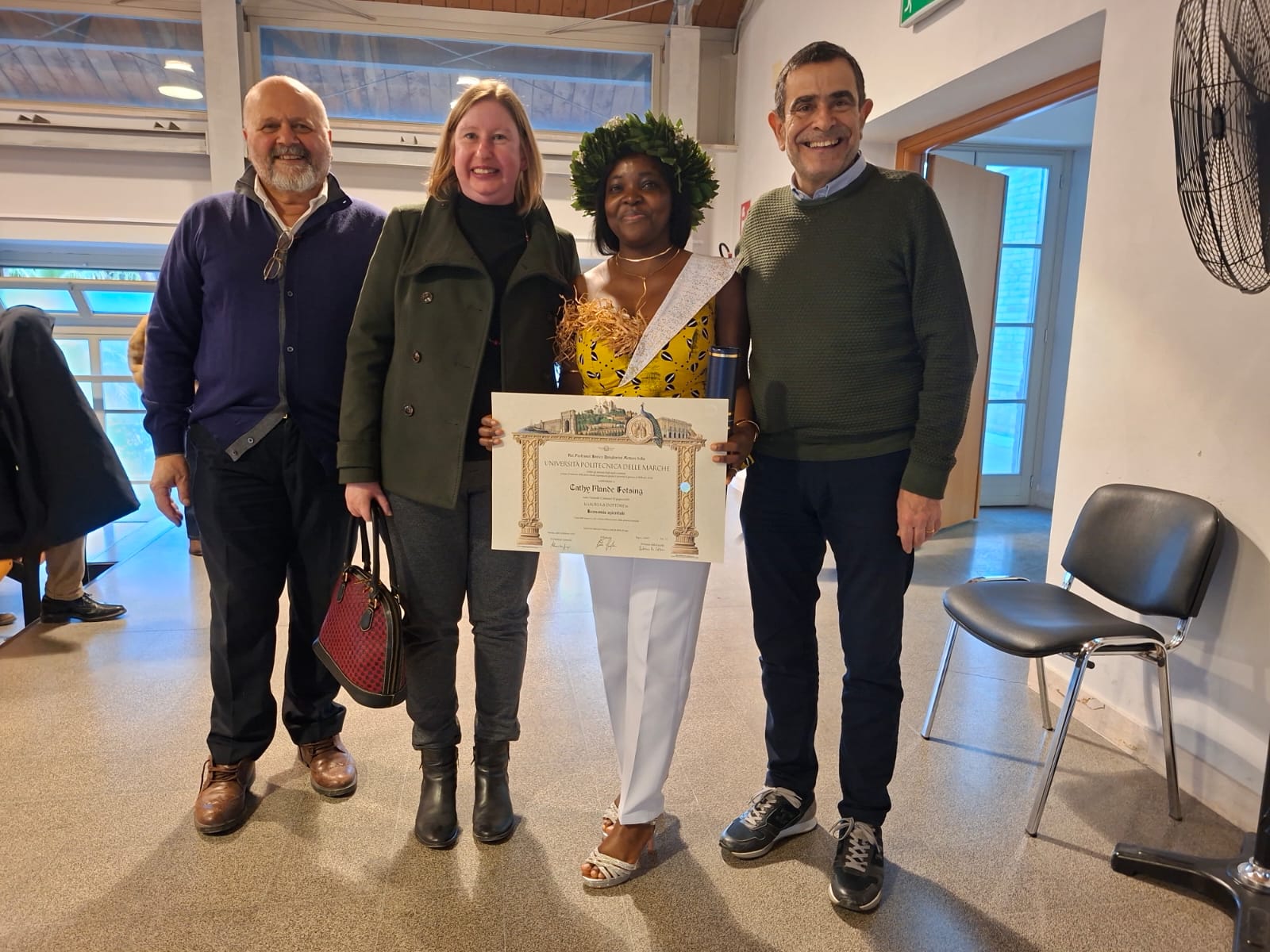
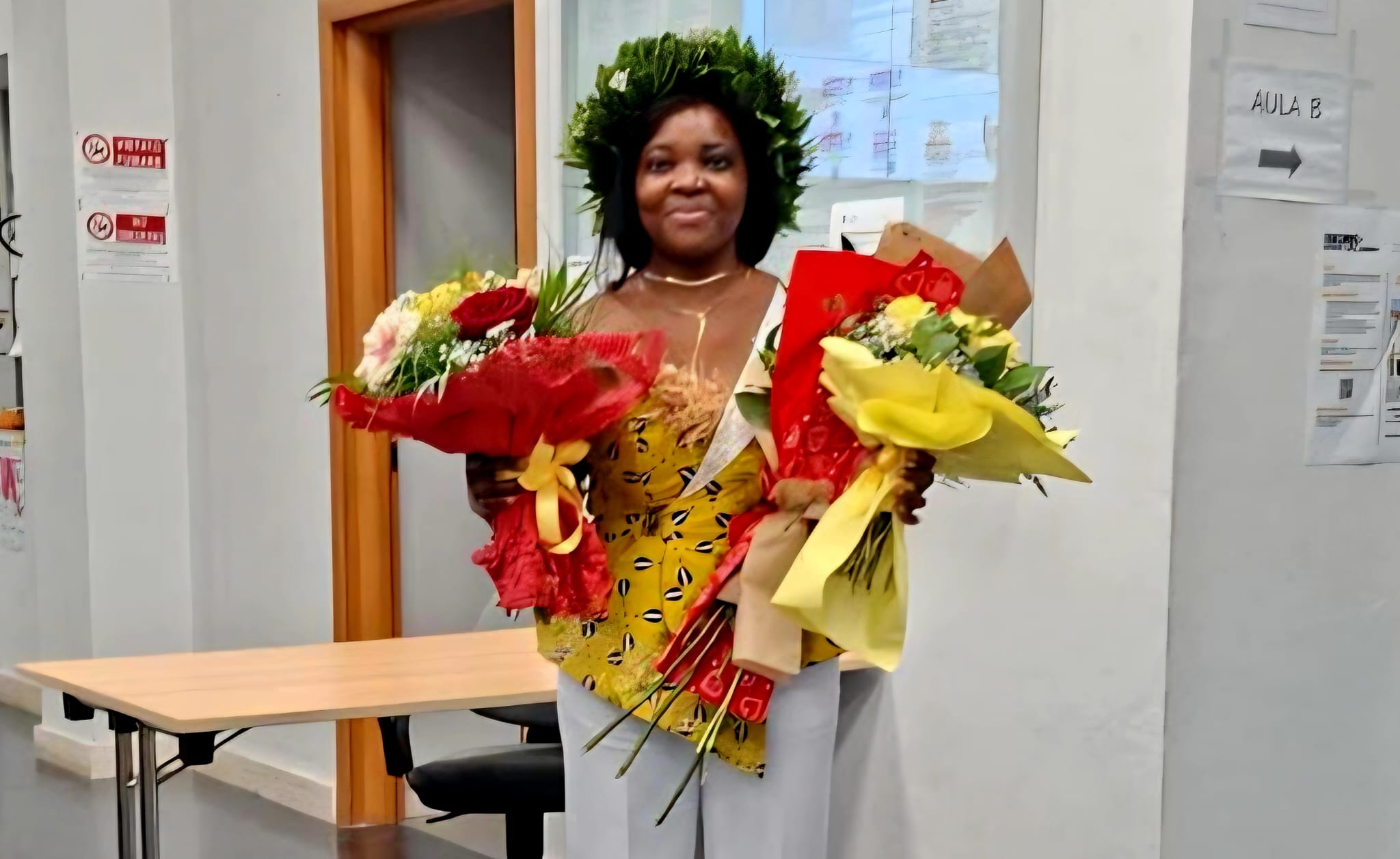
SAN BENEDETTO DEL TRONTO – Due occhi grandi e profondi, un sorriso sincero e felice, una voce calma ma piena di vita: mi si presenta così la giovane Cathy Mande Fotsing, africana di 27 anni originaria del Camerun, che lo scorso Venerdì, 13 Febbraio 2026 ha conseguito la Laurea in Economia presso l’Università Politecnica delle Marche – sede di San Benedetto del Tronto.
La giovane donna è arrivata in Italia nel 2022 con un visto di studio. Dopo tre anni di sacrifici, ha raggiunto questo encomiabile traguardo grazie al suo grande impegno come studentessa e come lavoratrice e grazie al sostegno della Caritas diocesana di San Benedetto del Tronto (che opera principalmente grazie ai fondi 8×1000 alla Chiesa Cattolica), che l’ha aiutata a superare le difficoltà familiari, economiche e sociali alle quali ha dovuto far fronte.
L’abbiamo incontrata per farci raccontare la sua storia.
Perché ha deciso di venire in Italia a studiare?
In Camerun la terra è ricca di petrolio ed altre risorse, ma la ricchezza non è ben distribuita: ci sono famiglie molto ricche e altre molto povere. Noi eravamo una famiglia media: mia madre era commerciante di cibo di prima necessità, mio padre invece lavorava in una pasticceria. In tutto siamo otto tra fratelli e sorelle e purtroppo nel 2019 mia madre è morta. Ho deciso allora di andarmene dal mio Paese per costruirmi un futuro migliore. Questo desiderio alberga nel mio cuore da tempo, da quando ero piccola. Ho sempre pensato di venire in Italia dopo il diploma di maturità.
Il Governo camerunense, inoltre, ha buone relazioni con il Governo italiano e con altri Governi europei. Con l’Italia, in particolare, c’è un accordo che consente a noi Camerunensi di venire in Italia a studiare. Ma questo è possibile solo dopo aver ottenuto il CILS, un certificato che attesti il buon uso della lingua italiana. Visto che altri due miei fratelli avevano fatto lo percorso ed erano stati accolti uno a Rimini e uno a Cesena, ho pensato di provare a venire in Italia, sia perché sarei stata facilitata nella lingua sia perché avrei potuto riunirmi ai miei fratelli.
Infine, ho sempre sentito parlare bene dell’Italia, sia dai miei fratelli sia da altri Camerunensi che conosco. Quindi mi è sembrata la scelta migliore.
Come mai è finita a San Benedetto del Tronto?
Per caso, direi. Io 2 sorelle, che sono ancora in Camerun, e 5 fratelli che invece sono sparsi tra l’Italia e il Lussemburgo.
Il primo a partire è stato uno dei miei fratelli che in Camerun aveva conseguito una laurea triennale in Economia e Finanza, ma la mancanza di lavoro e di una formazione superiore qualificata lo hanno spinto a venire in Italia per completare gli studi. Solo che qui in Italia, precisamente a Rimini, non hanno riconosciuto il titolo che possedeva e ha dovuto ricominciare il percorso di studi daccapo. Dopo aver ottenuto la laurea magistrale, è andato in Lussemburgo a lavorare. Successivamente un altro fratello, che ha studiato Agronomia, è venuto a Cesena e c’è rimasto per molti anni.
Quando ho deciso di venire in Italia, ho pensato di andare in Emilia Romagna per stare vicino a mio fratello che ancora è a Cesena e di iscrivermi ad UniBo – sede di Rimini, ma purtroppo un documento non è arrivato in tempo e non mi hanno ammesso a Rimini. A quel punto ho fatto domanda all’Università Politecnica delle Marche, che aveva scadenze più lunghe, e sono riuscita ad entrare a San Benedetto del Tronto.
Quali sono state le difficoltà maggiori che ha incontrato in questi anni di studio in Italia?
Il primo problema che ho dovuto affrontare è stato l’alloggio. Contavo di vivere con mio fratello a Cesena e mi sono ritrovata a San Benedetto senza casa. Mio fratello mi ha suggerito di andare alla Caritas e così ho fatto.
Devo dire che con me sono stati veramente gentili: mi hanno accolto senza farmi sentire fuori posto, mi hanno fatto spiegare la situazione, mi hanno chiesto i documenti e per tutto il primo anno di permanenza in Italia mi hanno dato una stanza da letto alla Caritas, permettendomi così di andare all’università e di ambientarmi in un contesto per me totalmente nuovo.
Nel secondo anno, poi, mi hanno anche aiutato a cercare un lavoro e una casa. Dal Lunedì al Venerdì mattina andavo a lezione e studiavo, mentre il Venerdì sera, il Sabato e la Domenica facevo la cameriera in un locale a San Benedetto. Così ho potuto pagare l’affitto che era di 350 ero al mese. A mangiare continuavo ad andare alla mensa della Caritas a pranzo, mentre a cena prendevo il cibo da lì e me lo portavo nell’appartamento. Devo dire quindi che il secondo ed il terzo anno sono andati molto meglio.
C’è stato solo un problema: la proprietaria dell’appartamento in cui risiedevo me lo concedeva in affitto solo da Settembre a Maggio, perché d’estate voleva affittarlo ai turisti, quindi nei mesi di Giugno, Luglio ed Agosto dovevo tornare per forza in Caritas.
Diciamo che l’avere un tetto sotto cui dormire e due pasti garantiti al giorno sono due requisiti indispensabili per poter sopravvivere senza impazzire. Io, grazie alla Caritas, li ho avuti sempre in questi tre anni, quindi sono molto riconoscente alle persone che ho incontrato qui e che mi hanno fatto del bene.
Oltre a tutti problemi che già avevo, nel 2024 è morto anche mio padre. Per me è stato un duro colpo. Avere vicino qualcuno che si è preso cura di me anche in quei momenti difficili è qualcosa che non scorderò mai.
Come è stata la sua vita in Caritas?
La Caritas fa molto per aiutare la gente. In questi anni ho visto persone che non sapevano dove dormire o cosa mangiare e la Caritas ha dato loro una mano concreta. Ho conosciuto stranieri che sono giunti in Italia con i barconi, provenienti dalla Guinea o dal Gambia, i quali mi hanno raccontato la loro storia e come sono stati accolti qui dopo aver rischiato seriamente di morire. Ho visto rifugiate ucraine con i loro figli trovare un tetto accogliente. La Caritas fa veramente molto per aiutare, anche se non può aiutare tutti, sia perché mancano i finanziamenti sia perché a volte gli ospiti hanno delle dipendenze dalle quali è difficile uscire. Ma la Caritas si prende cura di tutti, soprattutto di quelli che non hanno nessuno che si prenda cura di loro.
In Caritas ho ritrovato l’ambiente accogliente del mio Paese. In Camerun si parlano tante lingue: oltre all’inglese e al francese, ci sono oltre 200 dialetti bantu. Professiamo anche più religioni: quella cristiana per lo più, ma non solo cattolica, anche protestante ed evangelica. In Camerun inoltre è consentita la poligamia, anche se si fa sempre più fatica a trovare donne consenzienti che accettino di dividere il proprio marito con altre donne. E proveniamo da villaggi diversi, con usi e tradizioni diversi. Nonostante tutte queste differenze, noi siamo abituati a vivere tutti insieme. La nostra è una cultura accogliente, che non fa discriminazioni. Ci sentiamo tutti fratelli. Se in un Paese straniero incontriamo un camerunense, noi lo aiutiamo. In Caritas ho ritrovato molto di questi valori: tutti si sentono come fratelli e vivono sempre sentimenti di accoglienza, rispetto e condivisione.
Fuori dalla Caritas com’è stata la sua vita in questi tre anni?
All’università inizialmente non è stato facile, perché ero l’unica africana. Sono andata in segreteria per sapere se ci fossero altri studenti africani e mi hanno detto che c’erano due nigeriani che però stavano terminando gli studi e non partecipavano alle lezioni tutti i giorni, quindi, quando giravo per i corridoi, ero l’unica nera. Durante il primo semestre è stata dura: non trovavo nessuno con cui parlare. Poi, nel secondo semestre, ho iniziato a confrontarmi di più con gli altri, se non altro per motivi di studio. In particolare uno dei professori ha chiesto ad un’altra studentessa di aiutarmi a mettermi in pari, visto che ero arrivata dopo l’inizio delle lezioni. Questa ragazza, che è italiana, mi ha subito accolta bene, mi ha passato gli appunti delle lezioni precedenti e ci siamo scambiate i numeri. Ogni volta che avevo un dubbio, chiamavo sempre lei, anche perché era l’unico punto di riferimento che avevo. Così sono diventata sua amica e, un po’ alla volta, ha iniziato a farmi conoscere altre sue amiche e sono entrata nel gruppo.
Maria – così si chiama la mia amica – è stata molto importante nella mia vita universitaria e privata. Quando ho perso mio padre, ero in periodo di esami, ma non avevo la forza di fare nulla. Mi sentivo svuotata: avevo già perso mia madre e ora anche mio padre, per un momento ho pensato di lasciare tutto e tornare in Camerun. Maria mi è stata molto vicino: mi scriveva tutti i giorni e mi diceva di non mollare. Penso che, in un momento di difficoltà, avere qualcuno vicino fa la differenza. E io, ringraziando Dio, ho avuto vicino a me persone meravigliose.
Quali sono le persone che porta nel cuore?
Prima di tutto don Gianni, Fernando, Giovanni e Suor Vittoria. Fernando, in particolare, oltre all’accoglienza in Caritas, lo ricorderò per sempre per le ripetizioni di Economia Aziendale, Contabilità e Analisi Finanziaria. Anche lui, nei miei momenti di difficoltà, mi ha detto di non lasciare a metà, di proseguire con pazienza e determinazione, perché l’obiettivo era dietro l’angolo.
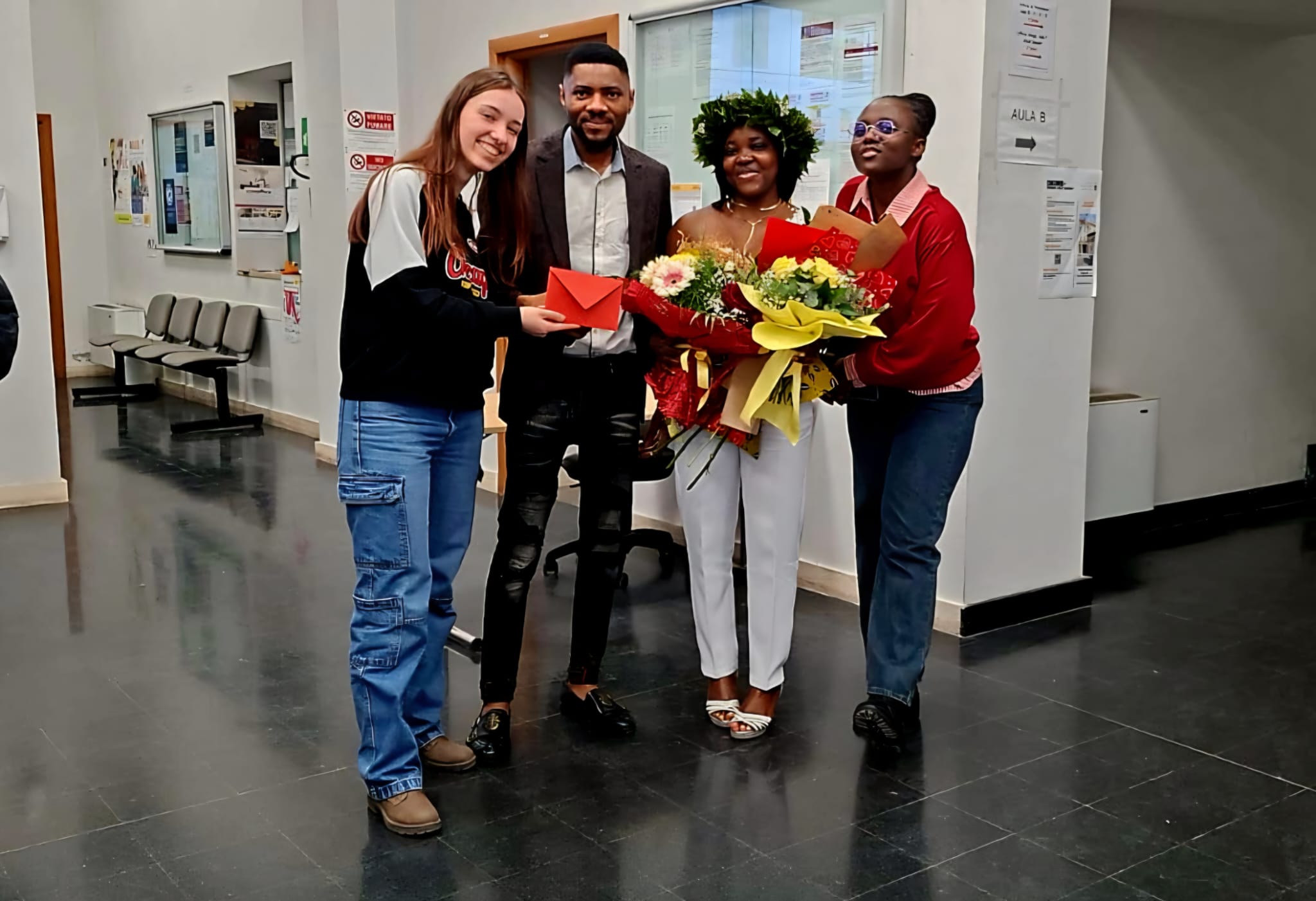
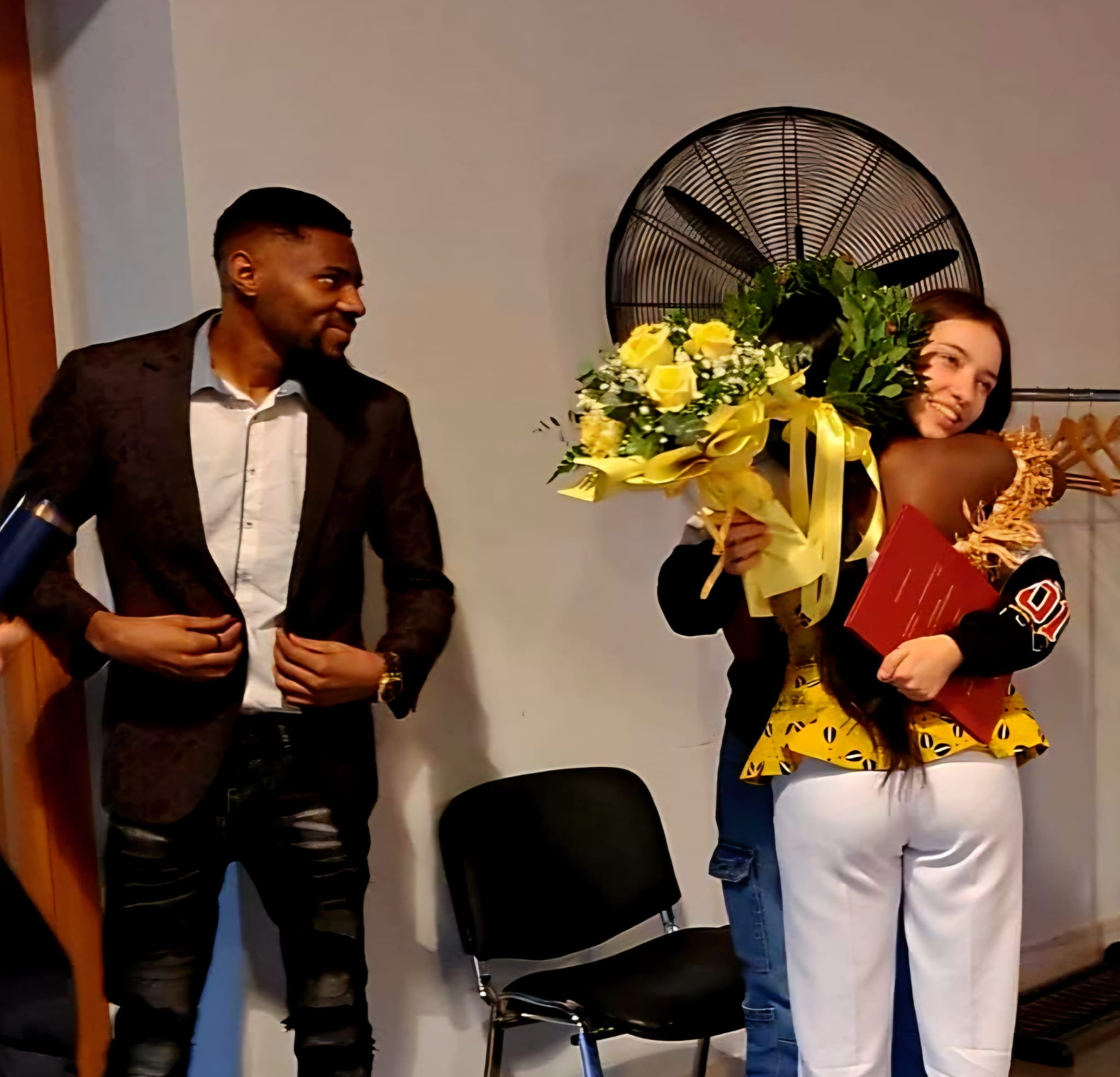
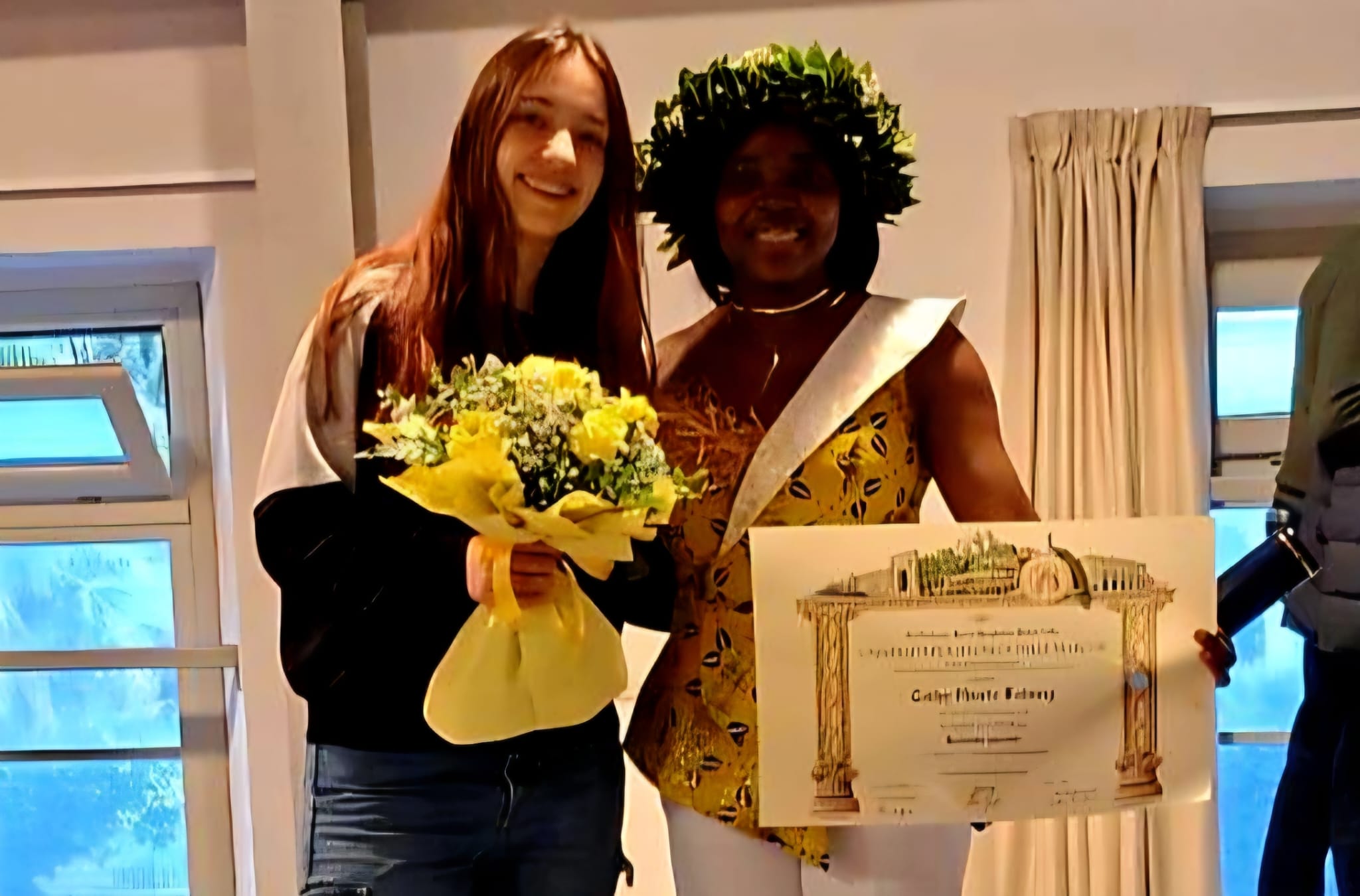
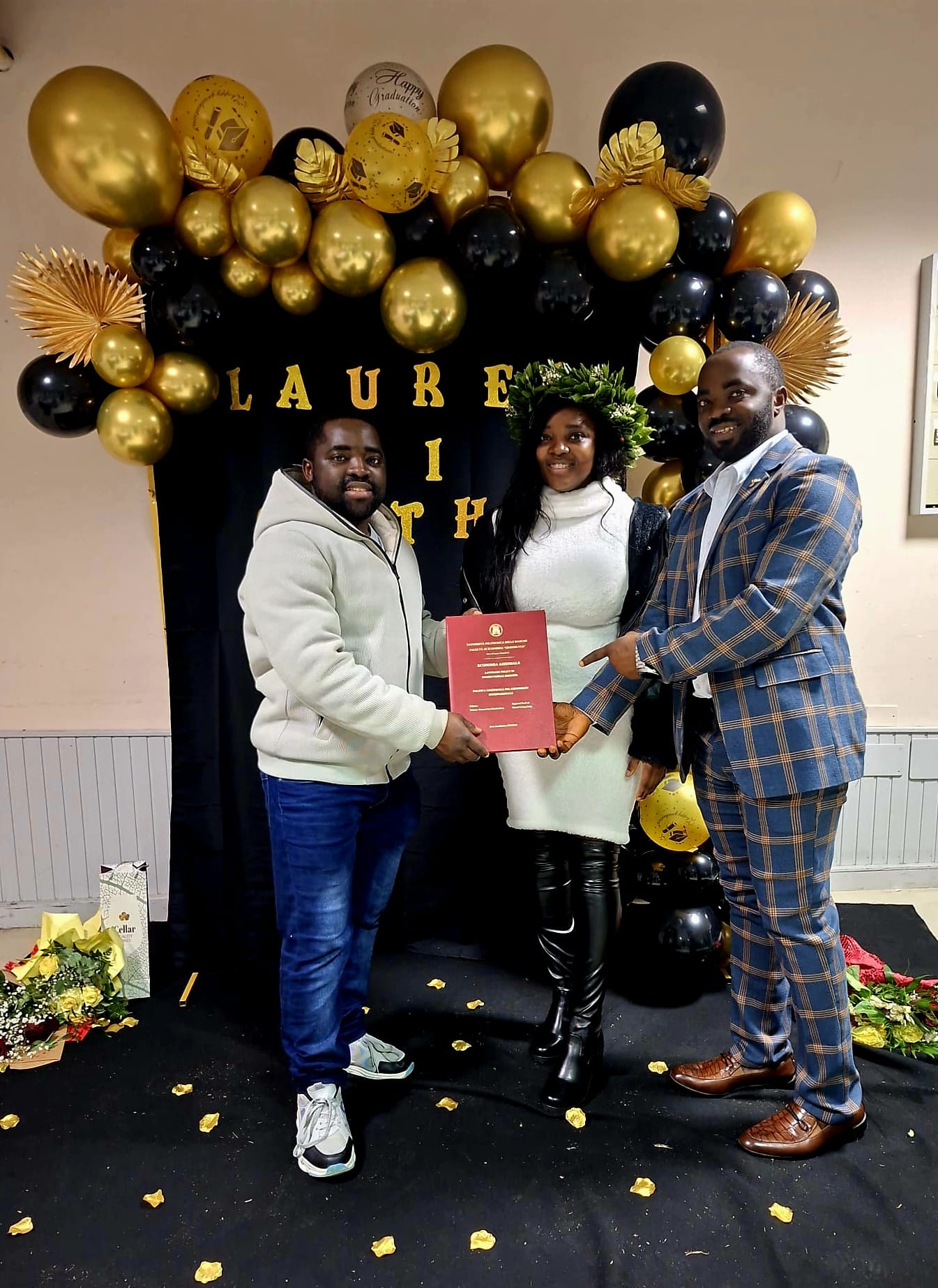
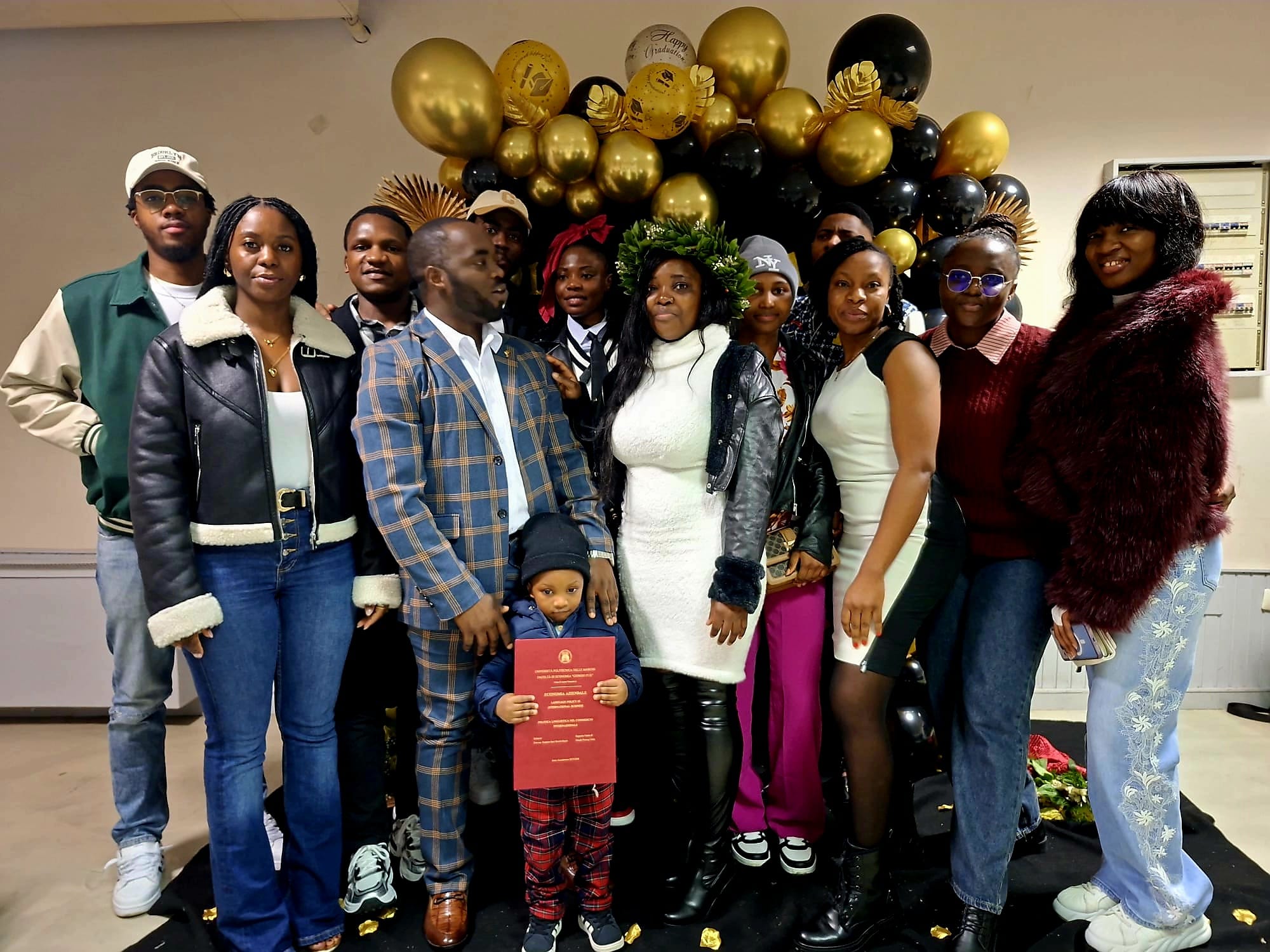
Poi sicuramente la mia amica Maria che non mi ha lasciato mai sola. Neanche il giorno della mia laurea: è stata con me tutto il tempo, mi ha assistito e abbiamo fatto festa insieme ai miei fratelli e alle persone più care. Purtroppo mancavano le miei sorelle che non sono venute perché non hanno ottenuto il visto. Mi sarebbe piaciuto averle con me, perché loro sono più grandi di me – hanno 50 e 36 anni – e, dopo che è morta mia madre, si sono prese cura di me, soprattutto la più grande, che è stata come una seconda madre. Purtroppo non è stato possibile averle qui in Italia, ma spero che in futuro possano venire a trovarmi.
Ha mai subito episodi di discriminazione?
In Italia ho ricevuto sempre una buona accoglienza. Ho avuto un’unica esperienza negativa. Una volta, mentre lavoravo come cameriera, ho vissuto dei brutti momenti: la madre del titolare mi trattava molto male e sono stata costretta a lasciare il lavoro, perché non ce la facevo più a sopportare parole e comportamenti offensivi. Ma è stata una breve parentesi: tutti gli altri Italiani che ho incontrato sono stati molto gentili con me.
Quali sono i suoi progetti per il futuro?
Mi sono laureata con una tesi in lingua inglese su “Language Policy in International Business“. Visto che in Camerun le lingue ufficiali sono due, l’inglese ed il francese, e visto che ora conosco molto bene anche l’italiano, ho pensato che potrei occuparmi proprio di quali siano le regole linguistiche nell’esercizio del commercio internazionale. Mi piacerebbe diventare una donna d’affari impiegata in aziende private oppure lavorare in banca.
Il mio sogno era quello di andare in Lussemburgo subito dopo la laurea, visto che lì ci sono i miei fratelli e anche maggiori opportunità di lavoro nel settore che preferisco, quello bancario. Ma ho visto che questo richiederà un po’ di tempo, sia per questioni burocratiche sia per questioni economiche, quindi nel frattempo ho pensato di iscrivermi alla Laurea Magistrale qui in Italia, ad Ancona. Il corso di studi si chiama “International Economics and Commerce” ed è la naturale prosecuzione della Triennale che ho appena conseguito.
In ambito privato, invece, cosa si aspetta dal futuro?
Mi auguro prima di tutto di costruire una vita serena e stabile. Mi piacerebbe avere una famiglia, quindi sposarmi ed avere figli. Mi piacciono molto i bambini, quindi sogno di averne presto. Poi vorrei mantenere forti i legami con i miei fratelli e le mie sorelle e vorrei anche continuare a coltivare amicizie sincere.
Vorrei anche crescere come persona, viaggiare, conoscere culture diverse e continuare ad imparare cose nuove e nuove lingue. Per me è importante trovare un equilibrio tra lavoro e vita personale.
Che messaggio vuole dare ai nostri lettori?
Vorrei lanciare un messaggio ai giovani come me, La vita ha degli alti e dei bassi, ma non ci dobbiamo fermare alle difficoltà, perché purtroppo capiterà spesso di averne. Al contrario, se abbiamo un sogno, dobbiamo rincorrerlo. E se non ce l’abbiamo, dobbiamo andare a cercarlo! Avere un obiettivo è molto importante per non lasciarsi sopraffare dagli eventi della vita.
Poi vorrei anche dire che studiare è molto importante. Studiando, ci si istruisce, ma non solo dal punto di vista degli studi: non si imparano infatti solo nozioni, ma si cresce nella cultura e nella conoscenza del mondo. Questo è molto importante per costruire un futuro di pace nel mondo.
L’ultima cosa, che mi sento di dire, riguarda proprio le relazioni umane. Non importa quale religione professiamo o da quale Paese proveniamo o quale sia il colore della nostra pelle. Quello che importa è vivere con amore, nel rispetto dell’altro. Io, ad esempio, appartengo alla Chiesa cristiana evangelica, ma in Caritas non hanno mai cercato di convincermi a diventare cattolica. A volte la Domenica sono andata nella chiesa di San Filippo Neri ad ascoltare la Messa e una volta don Gianni mi ha chiesto anche di animare la Via Crucis, raccontando la mia esperienza. L’ho fatto volentieri, perché è stata una mia scelta: nulla mi è stato imposto.
Credo che il segreto per vivere in pace sia proprio questo: vivere insieme nel rispetto l’uno dell’altro, comprendendo che la relazione con Dio è preziosa per ciascuno di noi ed è quindi qualcosa a cui non dobbiamo rinunciare, bensì dobbiamo essere liberi di esprimerla in tempi e modi che desideriamo, purché non facciano male agli altri. Se ci lasciamo guidare dall’amore, sicuramente riserveremo accoglienza e rispetto alle persone che incontreremo e saremo felici di accettare l’altro così come è, nella consapevolezza di essere anche noi accettati così come siamo.
A Cathy vanno i nostri migliori auguri per un futuro ricco di soddisfazioni umane, accademiche e professionali!
Tutte le foto della festa dopo la versione dell’articolo in lingua inglese.
FOR OUR INTERNATIONAL READERS:
SAN BENEDETTO DEL TRONTO – Two large and deep eyes, a sincere and happy smile, a calm yet lively voice: this is how Cathy Mande Fotsing introduces herself to me. A 27-year-old African woman originally from Cameroon, she graduated in Economics from the Polytechnic University of Marche in San Benedetto del Tronto last Friday, February 13, 2026.
The young woman arrived in Italy in 2022 on a study visa. After three years of sacrifice, she achieved this commendable milestone thanks to her great commitment as a student and worker, and thanks to the support of the diocesan Caritas of San Benedetto del Tronto, which helped her overcome the family, economic, and social difficulties she faced.
We met with her to hear her story.
Why did you decide to come to Italy to study?
In Cameroon, the land is rich in oil and other resources, but the wealth is unevenly distributed: there are very rich families and very poor ones. We were an average family: my mother was a food merchant, while my father worked in a pastry shop. There were eight of us, including brothers and sisters, and sadly, in 2019 my mother passed away. Then I decided to leave my Country to build a better future for myself. This desire has been in my heart for a long time, since I was little. I always thought about coming to Italy after graduating high school.
The Cameroonian Government also enjoys good relations with the Italian Government and other European Governments. With Italy, in particular, there’s an agreement that allows Cameroonians to come to Italy to study. However, this is only possible after obtaining the CILS, a certificate attesting to proficiency in the Italian language. Since two of my brothers had completed the program and were accepted, one in Rimini and one in Cesena, I thought I’d try coming to Italy, both because I’d have easier language skills and because I could be reunited with my brothers.
Finally, I’ve always heard good things about Italy, both from my brothers and from other Cameroonians I know. So it seemed like the best choice for me!
How did you end up in San Benedetto del Tronto?
By chance, I’d say. I have two sisters, who are still in Cameroon, and five brothers who are scattered between Italy and Luxembourg.
The first to leave was one of my brothers. He had earned a bachelor’s degree in Economics and Finance in Cameroon, but the lack of work and of a qualified higher education pushed him to come to Italy to complete his studies. However, here in Italy, specifically in Rimini, his degree wasn’t recognized and he had to start his studies all over again. After earning his master’s degree, he went to Luxembourg to work. Later, another brother, who studied Agronomy, came to Cesena and now he’s still there.
When I decided to come to Italy, I considered going to Emilia Romagna to be close to my brother, who’s still in Cesena, and enrolling at UniBo – Rimini campus. Unfortunately, one of my documents didn’t arrive in time and they didn’t admit me to Rimini. So I applied to the Polytechnic University of Marche, which had longer deadlines, and I managed to get into San Benedetto del Tronto.
What were the biggest challenges you encountered during your years studying in Italy?
The first problem I faced was housing. I was planning to live with my brother in Cesena, but I found myself homeless in San Benedetto. My brother suggested I go to Caritas, so I did.
I must say they were truly kind to me: they welcomed me without making me feel out of place, they had me explain my situation, they asked for my documents and, for my entire first year in Italy, they gave me a bedroom at Caritas, allowing me to go to university and settle into a completely new environment.
In my second year, they also helped me find a job and a place to live. From Monday to Friday morning, I went to class and studied, while on Friday evenings, Saturdays, and Sundays, I worked as a waitress at a restaurant in San Benedetto. This allowed me to pay my rent, which was 350 euros a month. For lunch, I continued to go to the Caritas soup kitchen, while for dinner, I picked up food from there and brought it back to my apartment. So, I have to say, the second and third years went much better.
There was just one problem: the owner of the apartment I was living in, only let me rent it from September to May, because she wanted to rent it to tourists in the summer, so in June, July, and August, I had to return to Caritas.
Let’s just say that having a roof over my head and two guaranteed meals a day are two essential requirements for surviving without going crazy. Thanks to Caritas, I’ve had both these things throughout these three years, so I’m deeply grateful to the people I’ve met here and who have done me so much good.
In addition to all the problems I already had, my father also died in 2024. It was a hard blow for me. Having someone close to me who cared for me even during those difficult times is something I’ll never forget.
What was your life like at Caritas?
Caritas does a lot to help people. Over the years, I’ve seen people who didn’t know where to sleep or what to eat, and Caritas has given them tangible help. I’ve met foreigners who arrived in Italy on boats, from Guinea or Gambia, who told me their stories and how they were welcomed here after having seriously risked their lives. I’ve seen Ukrainian refugees and their children find a welcoming home. Caritas truly does a lot to help, even though it can’t help everyone, both because of a lack of funding and because sometimes guests have addictions that are difficult to overcome. But Caritas cares for everyone, especially those who have no one to care for them.
At Caritas, I rediscovered the welcoming atmosphere of my country. Many languages are spoken in Cameroon: in addition to English and French, there are over 200 Bantu dialects. We also practice multiple religions: mostly Christianity, but not only Catholicism, but also Protestant and Evangelical. Polygamy is also permitted in Cameroon, although it is increasingly difficult to find consenting women who agree to share their husbands with other women. And we come from different villages, with different customs and traditions. Despite all these differences, we are accustomed to living together. Ours is a welcoming culture that does not discriminate. We all feel like brothers. If we meet Cameroonian people in a foreign country, we help them. At Caritas, I found many of these values: everyone feels like brothers and sisters and always experiences feelings of welcome, respect and sharing.
Outside of Caritas, what was your life like these past three years?
At university, it wasn’t easy at first, because I was the only African student. I went to the administration office to see if there were other African students, and they told me there were two Nigerians, but they were finishing their studies and weren’t attending classes every day, so when I wandered the halls, I was the only black person. During the first semester, it was tough: I couldn’t find anyone to talk to. Then, in the second semester, I started interacting more with others, if only for academic reasons. In particular, one of the professors asked another student to help me catch up, since I’d arrived after class had started. This girl, who is Italian, welcomed me immediately, gave me her notes from previous classes and we exchanged numbers. Whenever I had any doubts, I always called her, also because she was the only point of contact I had. So I became her friend and, little by little, she started introducing me to other friends of hers and I joined the group.
Maria—that’s my friend’s name—has been very important in my university and personal life. When I lost my father, I was in exam season, but I didn’t have the strength to do anything. I felt empty: I had already lost my mother and now my father, too. For a moment, I considered leaving everything behind and returning to Cameroon. Maria was very close to me: she wrote to me every day and told me not to give up. I think that, in a difficult moment, having someone close to me makes all the difference. And, thanks to God, I had wonderful people close to me.
Who are the people in your heart?
First of all, Father Gianni, Giovanni, Sister Vittoria and Fernando, in particular, who, in addition to his hospitality at Caritas, I will always remember for his tutoring in Business Economics, Accounting and Financial Analysis. He too, in my moments of difficulty, told me not to give up halfway, to persevere with patience and determination, because the goal was just around the corner.
Then, of course, my friend Maria, who never left me alone. Not even on my graduation day: she was with me the whole time, she looked after me and we celebrated with my brothers and my loved ones. Unfortunately, my sisters were missing; they couldn’t come because they didn’t get visas. I would have loved to have them with me, because they are older than me—they are 50 and 36 years old —and, after my mother died, they took care of me, especially the eldest, who was like a second mother. Unfortunately, it wasn’t possible to have them here in Italy, but I hope they can come to visit me in the future.
Have you ever experienced discrimination?
In Italy, I’ve always been welcomed warmly. I’ve only had one negative experience. Once, while working as a waitress, I had a tough time: the boss’s mother treated me very badly and I was forced to quit my job because I couldn’t stand the offensive words and behavior any longer. But it was a short-lived experience: all the other Italians I met were very kind to me.
What are your plans for the future?
I graduated with a thesis in English language on “Language Policy in International Business“. Since Cameroon has two official languages, English and French, and since I now also speak Italian very well, I thought I could focus on the linguistic rules in international business. I’d like to become a businesswoman working in private companies or in a bank.
My dream was to move to Luxembourg immediately after graduation, since my siblings are there and there are also more job opportunities in my favorite field, banking. But I realized that this would take some time, both for bureaucratic and financial reasons, so in the meantime I decided to enroll in a master’s degree here in Italy, in Ancona. The program is called “International Economics and Commerce” and is the natural continuation of the bachelor’s degree I just completed.
What are your hopes for the future regarding your personal life?
First and foremost, I hope to build a peaceful and stable life. I’d like to start a family, get married and have children. I love children, so I dream of having them soon. I’d also like to maintain strong bonds with my brothers and sisters and continue to cultivate sincere friendships.
I’d also like to grow as a person, travel, experience different cultures and continue learning new things and languages. Finding a balance between work and personal life is very important to me.
What message would you like to share with our readers?
I’d like to send a message to young people like me: life has its ups and downs, but we shouldn’t stop at difficulties, because unfortunately, we’ll often encounter them. On the contrary, if we have a dream, we must chase it. And if we have not one, we must go and find it! Having a goal is very important to avoid being overwhelmed by life’s events.
I’d also like to say that studying is very important. By studying, we educate ourselves, but not only academically: we don’t just learn notions, but we grow in culture and knowledge of the world. This is very important for building a future of peace in the world.
The last thing I feel like saying concerns human relationships. It doesn’t matter what religion we profess, what country we come from or what color our skin is. What matters is living with love, with respect for others. I, for example, belong to the Evangelical Christian Church, but at Caritas they never tried to convince me to become Catholic. Sometimes on Sundays I went to the church of San Filippo Neri to attend Mass, and once Father Gianni even asked me to lead the Stations of the Via Crucis, sharing my experience. I did so willingly, because it was my choice: nothing was forced upon me.
I believe the secret to living in peace is precisely this: living together with mutual respect, understanding that our relationship with God is precious to each of us and therefore something we must not give up. Rather, we must be free to express it when and how we choose, as long as it doesn’t harm others. If we let ourselves be guided by love, we will surely welcome and respect the people we meet and be happy to accept others as they are, knowing that we too are accepted as we are.
Our best wishes to Cathy for a future filled with personal, academic, and professional fulfillment!


1 commento
Lascia un commento
Altre news

Seguici sui social



Redazione Ancora Online
Proprietà Fondazione "Giuseppe Chiaretti"
Via Forte - San Benedetto del Tronto (Ap)
Registrazione Trib. di Ascoli Piceno: N. 211 del 24/5/1994
Direttore Responsabile: Simone Incicco
Direttore Editoriale: Pietro Pompei
Per comunicati: settimanaleancora@gmail.com
Telefono Redazione: 328/6325380
Privacy Policy
Cookie Policy
Americo Veccia
*i poveri ci evangelizzano* Emozionante la storia di Cathy, l'accoglienza di persone della Caritas, che conosco, l'apertura mentale e di cuore di Maria, la sua amica! Quando siamo umani con gli altri, gli altri ci umanizzano. E S. Benedetto del Tronto, la mia cittadina che porto nel cuore, ha bisogno di aperture di mente e di cuore! Grazie Cathy; grazie Maria, per il tuo esempio, non dico "cristiano", ma umano; grazie Fernando, mio amico, e in te, grazie a tutti gli operatori della Caritas.